
Chapter 2: The Principle Component of First Aid
Nazrin Ahmad
Learning Objectives
Type your learning objectives here.
- Define what first aid is.
- Recognise the fundamental principles of first aid.
- Explain the important components in rapid assessment.
- Describe the essential components of first aid management.
- Identify the types of injuries or medical conditions that may occur.
2.1 Introduction of First Aid
First aid (FA) refers to the immediate assistance provided to a person who is injured or experiencing medical illness. It includes the initial and basic procedures that are available before professional medical care is available. In some cases, the FA procedure is crucial to be implemented to save a life, while in other cases, it is commonly used to manage minor injuries and health issues. Although FA is frequently referred to as providing basic medical procedures, the actual services can vary. Sometimes you are required to perform a life-saving procedure that a layperson might think is an advanced procedure, but it is not. It just requires an integration of good knowledge and skills in managing the cases.
Anyone can be a first aider (FAr) regardless of whether they have ever received formal training in managing emergency cases or not. There is no specific requirement to be FAr. What is more important is that you know the principles of FA and have the courage, knowledge and skills to perform the basic life-saving procedures. Having good knowledge and skills may not guarantee that you will perform those skills when needed. It requires courage supplemented with knowledge and skills to make you confident, and the procedure performed is effective in mitigating medical injuries or issues.
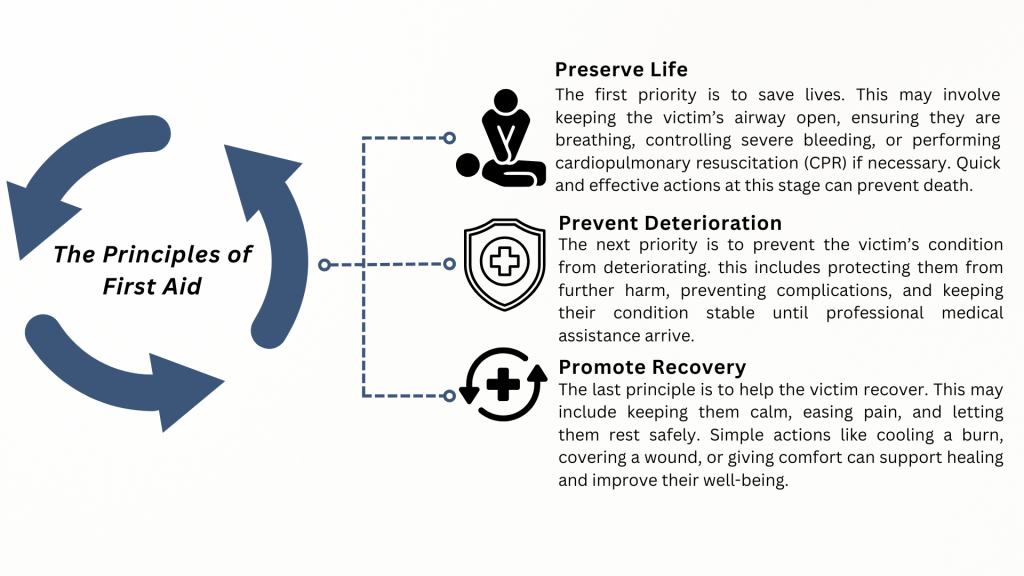
Being able to perform effective FAr is essential. It is delivered through rapid intervention to preserve life, prevent injury or illness from worsening, and promote recovery. Providing high-quality, evidence-based FA training for laypeople creates safer and healthier communities by reducing risks and improving response in everyday emergencies, disasters, and crisis situations.
2.2 Common Injuries and Illnesses
As highlighted earlier, injuries or illnesses can occur anywhere and at any time, and their nature often depends on the activities being carried out in a particular place.
The common injuries and medical emergencies that potentially could occur in the office are as follows:
- Cuts and lacerations
- Burns
- Slips, trips, and falls
- Sprains and strains
- Eye injuries
- Fainting (syncope)
- Allergic reaction
- Asthma attacks
- Head injuries
- Seizures
- Choking
- Cardiac arrest
2.3 The Principles of First Aid
The principles of First Aid serve as the foundation for providing immediate and effective care during medical emergencies. These principles can be summarised into three key goals:
2.4 Vital Component in First Aid Management
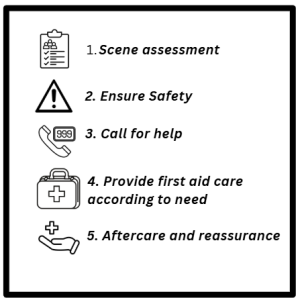
In an emergency, it is essential to remain calm and act systematically. Prioritising care means deciding what to do first so that the most serious and life-threatening problems are handled before less urgent ones. This helps you give adequate care and prevents mistakes when under pressure. The FAr should always follow the vital components of emergency management, which include:
2.4.1 Scene Assessment
Begin these initial steps by taking a deep breath and observing the entire scene. Gather and make a rapid analysis of types of emergencies, number of victims, and identify whether it is a trauma injury or involves a medical case, such as a seizure, etc. At the same time, identify any potential hazards that could harm the victim and the FAr, such as fire, exposed electricity, or hazardous chemicals.
2.4.2 Ensure Safety
Always prioritise your own safety before attending to the casualty or others nearby. If the area is not safe, do not attempt to enter and wait for professional help to arrive. Whenever possible, use protective items such as gloves, face shields, or hand sanitiser to minimise the risk of infection.
2.4.3 Call for Help
In a serious emergency, immediately contact the emergency services by dialling 999 or the local emergency number. Give clear and accurate details about the incident, including the exact location, the number of victims, and any potential dangers at the scene. If other people are present, you may ask them to make the call while you begin providing First Aid.
2.4.4 Provide First Aid Care According to Need
Always treat the most serious problems first, such as unconsciousness, heavy bleeding, or difficulty breathing. Once these life-threatening conditions are under control, you can then attend to less serious injuries, including minor cuts, sprains, or burns.
2.4.5 Aftercare and Reassurance
Stay with the victim until professional help arrives, ensuring they are kept calm, warm, and comfortable. Reassure them that help is on the way. If there are witnesses or bystanders, offer them support as well, since emergencies can be distressing for everyone involved.