Chapter 8: Choking
Nazrin Ahmad
Learning Objectives
Type your learning objectives here.
- Understand what choking is.
- Types of choking.
- Relieve the choking maneuver.
- Adult choking.
- Pediatric choking.
8.1 Introduction to Choking
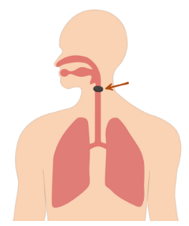
Choking occurs when a foreign object, such as food or a small item, blocks the airway and prevents normal breathing. It is a medical emergency because the lack of oxygen can lead to brain damage or death within minutes if not managed quickly. Recognizing the signs, such as difficulty breathing, inability to speak or cough, or clutching the throat, is crucial.
Relieving a choking episode involves immediate first aid measures to clear the airway. These include encouraging the victim to cough, giving back blows, and applying abdominal thrusts (Heimlich manoeuvre) or chest thrusts if necessary. Prompt and correct action can restore airflow, prevent complications, and save the victim’s life.
8.2 Types of Choking
Choking can be classified into mild, moderate, and severe, depending on the degree of airway obstruction. In mild choking, the airway is only partially blocked, allowing the victim to breathe, speak, or cough. The person may appear anxious and clutch their throat. However, the cough is usually strong and effective in expelling the obstruction.
In moderate choking, the airway becomes more restricted, making it harder to breathe. The victim may only be able to speak in short or weak sentences, with noisy or wheezy breathing, and a weak or ineffective cough. Signs of distress and panic are more obvious at this stage, and first aid measures such as back blows and abdominal thrusts are necessary.
In severe choking, the airway is completely blocked, preventing any airflow from entering or exiting the lungs. The victim is unable to breathe, speak, or cough, and may show the universal choking sign by grasping the throat. Cyanosis, or bluish discolouration of the lips and skin, may develop rapidly. Without prompt intervention, the victim can lose consciousness. Severe choking is a life-threatening emergency requiring immediate action, including back blows, abdominal or chest thrusts, and, if unresponsive, the initiation of CPR.
8.3 Relieve Choking Manoeuvre
8.3.1 Heimlich Manoeuvre (abdominal thrust)
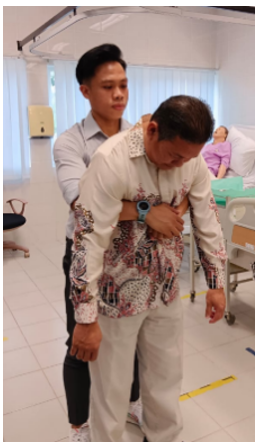
The Heimlich manoeuvre is a life-saving first aid technique used to relieve choking in adults and children over one year of age. It is performed when a foreign object completely obstructs the airway, preventing the victim from breathing, speaking, or coughing effectively (severe choking). The manoeuvre works by creating a sudden upward pressure on the diaphragm, which compresses the lungs and forces air out of the airway. This burst of air can expel the object lodged in the throat.
To perform the Heimlich manoeuvre, the rescuer should first stand behind the choking victim and wrap their arms around the victim’s waist. One hand is clenched into a fist and placed just above the navel but below the rib cage, with the thumb side facing inward. The other hand grasps the fist, and the rescuer delivers quick, forceful upward thrusts into the abdomen. These thrusts are repeated until the object is expelled, and the victim can breathe normally, or until the victim becomes unresponsive.
8.3.2 Chest Thrust
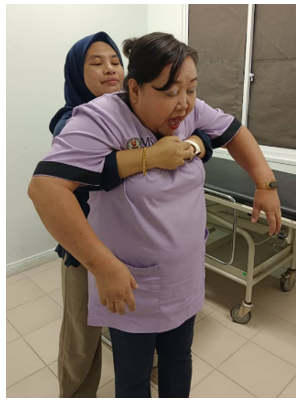
The chest thrust is a first aid technique used to relieve choking when abdominal thrusts (Heimlich manoeuvre) are not appropriate or effective. This method is particularly recommended for pregnant women and obese individuals, where abdominal thrusts may either be unsafe or impractical. The principle of the chest thrust is similar to the Heimlich manoeuvre, it creates a rapid increase in pressure inside the chest cavity and lungs, forcing air upward through the airway to expel the obstructing object.
To perform a chest thrust on a conscious adult or child, the rescuer stands behind the victim and places their arms under the armpits, wrapping them around the chest. The rescuer makes a fist and positions it on the middle of the breastbone, slightly above the lower end of the sternum. The other hand grasps the fist, and sharp, backward thrusts are delivered against the sternum. These thrusts are repeated until the object is expelled or the victim becomes unresponsive.
Chest thrusts are effective and safer alternatives when abdominal thrusts may cause harm, such as risk of injury to the uterus in pregnancy or difficulty accessing the abdomen in obese individuals. However, care must be taken to avoid placing thrusts too low on the sternum or too forcefully, as this could result in injury to the ribs or internal organs. When applied correctly, chest thrusts are a crucial manoeuvre that can save lives in choking emergencies.
8.3.3 Back Blow and chest Thrusts
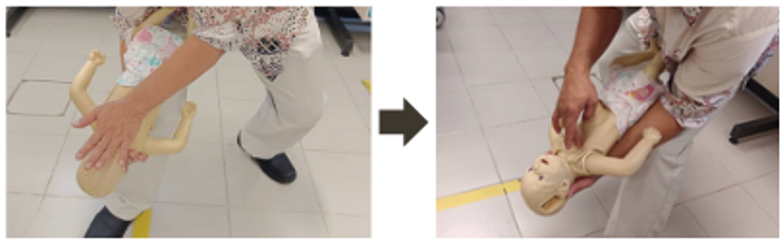
For infants under one year old, the recommended technique to relieve choking is a combination of back blows and chest thrusts, as abdominal thrusts are unsafe at this age. If the infant is unable to cry, cough, or breathe, immediate intervention is required. The rescuer should position the infant face down on their forearm with the head lower than the chest, supporting the head and jaw while keeping the airway clear. Using the heel of the hand, five firm back blows are delivered between the infant’s shoulder blades, checking after each blow to see if the obstruction has cleared. If the object does not come out, the infant is turned onto their back with the head still lower than the chest, and two fingers are placed on the lower half of the breastbone just below the nipple line. Five quick chest thrusts are then given, pressing sharply to create pressure that may dislodge the obstruction. The cycle of five back blows and five chest thrusts is repeated until the airway is cleared or the infant becomes unresponsive. If the infant becomes unresponsive, emergency help must be called immediately, and CPR should be started, beginning with chest compressions and checking the mouth for any visible obstruction before giving rescue breaths.