
Chapter 8: Corporate Governance and Sustainability in International Business
“Good corporate governance is about having the right structures and processes in place to ensure that businesses can be held accountable for their actions and impact.”
– Sir Adrian Cadbury, Former Chairman of the Cadbury Committee
As the business world becomes more interconnected, corporate governance and sustainability are increasingly seen as pillars of long-term success. In today’s globalised economy, organisations are not only judged based on their financial performance but also on their ethical practices, environmental footprint, and contributions to social well-being. This chapter delves into the critical relationship between corporate governance and sustainability, the challenges businesses face in maintaining strong governance while pursuing sustainable practices, and the growing influence of Environmental, Social, and Governance (ESG) criteria in global business.
The Evolution of Corporate Governance
Corporate governance refers to the systems, rules, and practices that dictate how companies are directed and controlled. In the past, corporate governance was primarily concerned with shareholder interests – maximising profit and ensuring financial transparency. However, as businesses have expanded globally, the scope of governance has broadened to include accountability, ethics, corporate responsibility, and the sustainability of business operations.
The rise of corporate governance can be traced back to the 20th century, especially after high-profile scandals like Enronin 2001 and WorldCom in 2002, which exposed the devastating consequences of weak governance practices. These scandals led to significant regulatory reforms such as the Sarbanes-Oxley Act (SOX) in the U.S. and the UK Corporate Governance Code, which established stricter controls on corporate financial reporting, the role of boards of directors, and the accountability of executives.
Today, corporate governance involves a much wider range of issues beyond financial integrity. It includes addressing stakeholder interests, promoting transparency, managing ethical risks, and ensuring that companies contribute positively to the environment and society.
The Increasing Role of Sustainability in Corporate Governance
Sustainability is no longer just a buzzword; it is a critical aspect of modern corporate governance. Companies are under growing pressure from regulators, investors, customers, and employees to demonstrate that their operations are environmentally responsible, socially inclusive, and ethically sound. As global challenges like climate change, inequality, and resource depletion escalate, businesses must adopt practices that not only safeguard the environment but also create value for society.
The Triple Bottom Line (TBL) framework, which incorporates profit, people, and planet, has become a cornerstone of modern corporate governance. Companies that focus on sustainability are increasingly seen as leaders who are committed to the long-term health of the global community. For example, Unilever, a global consumer goods company, has integrated sustainability into its core business strategy. Its Sustainable Living Plan sets measurable goals related to carbon emissions, water usage, and sustainable sourcing, reflecting the company’s commitment to environmental and social responsibility. By prioritising sustainability, Unilever has gained customer loyalty, brand strength, and operational efficiency, proving that sustainability can also drive business success.
However, incorporating sustainability into corporate governance is not without its challenges. Businesses must balance short-term profitability with long-term environmental and social goals. For instance, companies in the oil and gas sector may find it difficult to align their operations with sustainability objectives due to the inherently polluting nature of their activities. While some companies, such as Shell and BP, are working to transition toward cleaner energy, the process of transforming their business models is costly and slow.
The Emergence of ESG (Environmental, Social, and Governance) Criteria
ESG has emerged as one of the most important metrics used by investors and stakeholders to evaluate the sustainability and ethical impact of businesses. ESG criteria assess a company’s environmental practices, social responsibility, and governance structures, offering a more comprehensive view of a company’s performance than traditional financial measures alone.
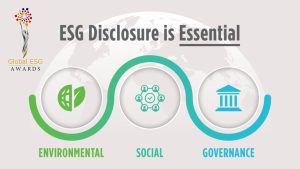
“Why are ESG AWARDS so essential?” by Globalesgawards0 is licensed under CC BY-SA 4.0.
This video highlights the growing pressures of climate change, public health, social inequality, and geopolitical stability on global leaders. It emphasizes the urgent need for improved transparency and comparability of ESG factors. The video explores how stakeholders can drive the global effort to provide capital markets with consistent, comparable, and valuable ESG information.
“Global ESG for Global Resilience” by World Economic Forum in YouTube is licensed under CC.
Investors, particularly institutional investors like BlackRock, Vanguard, and State Street, are increasingly demanding that companies disclose their ESG practices. BlackRock, for example, announced that it would prioritise investments in companies that have clear strategies for reducing their carbon footprints and addressing environmental risks. This shift has led to greater scrutiny of companies’ sustainability practices, compelling businesses to integrate ESG factors into their core strategies.
The rise of sustainable investing has forced businesses to adopt more transparent and robust governance structures. Companies must now disclose information about their environmental impact, labour practices, and ethical policies, in addition to their financial results. This demand for transparency has led to the adoption of Global Reporting Initiative (GRI) standards and the Sustainability Accounting Standards Board (SASB) frameworks, which provide guidelines for businesses to report their ESG performance consistently.
The Challenges of Corporate Governance and Sustainability
Despite the growing recognition of the importance of corporate governance and sustainability, there are significant challenges to achieving these goals. The complexity of global business operations means that managing sustainability across diverse markets and regulatory environments is often difficult. In developing countries, for example, businesses may face weak regulatory environments and limited infrastructure, which can hinder their ability to adopt sustainable practices.
Another challenge is the trade-off between profitability and sustainability. While many companies recognise the long-term benefits of sustainability, the upfront costs of transitioning to cleaner energy sources, ethical sourcing, or adopting environmentally friendly technologies can be prohibitive. Tesla, for instance, has invested heavily in developing electric vehicles and renewable energy solutions, which has required significant capital expenditures. However, these investments are expected to generate long-term returns by positioning Tesla as a leader in the growing electric vehicle market.
Additionally, businesses must address the accountability of their supply chains. As seen in the Apple and Nike cases, companies that fail to ensure ethical labour practices and sustainability in their supply chains face reputational damage and consumer backlash. The rise of supply chain transparency technologies, such as blockchain, is helping businesses track the environmental and social impact of their suppliers, ensuring compliance with their sustainability goals.
The Future of Corporate Governance and Sustainability
The future of corporate governance is inextricably linked to sustainability. As businesses increasingly face the financial, reputational, and regulatory consequences of ignoring environmental and social issues, sustainable governance will become a central pillar of corporate strategy.
In the coming years, it is likely that there will be more stringent regulations and global standards for corporate sustainability. Governments, particularly in Europe and Asia, are already introducing new climate change regulations and carbon taxation policies that require companies to take measurable actions to reduce their carbon footprints. These regulations will push businesses to adopt sustainable practices at a faster pace.
Furthermore, stakeholder capitalism will continue to gain prominence, as investors, consumers, and employees demand that companies focus on creating value for society, not just shareholders. This shift will redefine what it means for businesses to be successful, as companies will be evaluated not only on their financial returns but also on their contributions to global challenges like poverty, inequality, and environmental degradation.
Corporate governance and sustainability are no longer optional considerations in international business—they are fundamental to long-term success. Companies that embrace robust governance frameworks, focus on ethical practices, and prioritise sustainability will be better positioned to thrive in an increasingly complex and socially conscious world. The future of corporate governance lies in the integration of environmental, social, and governance factors into every aspect of business operations, ensuring that companies are not only financially successful but also responsible corporate citizens.
References:
- Freeman, R. E. (2010). Strategic Management: A Stakeholder Approach. Cambridge University Press.
- Elkington, J. (1999). Cannibals with Forks: The Triple Bottom Line of 21st Century Business. Capstone.
- UN Global Compact. (2020). “Corporate Governance and the Role of Business in Sustainability.” United Nations Global Compact.
- Brown, H., & Ulrich, D. (2016). The New Corporate Governance. Wiley.